
Scenario Planning for Community Climate Resilience
Using the Adaptation Game to Learn from the January 2026 Bushfires
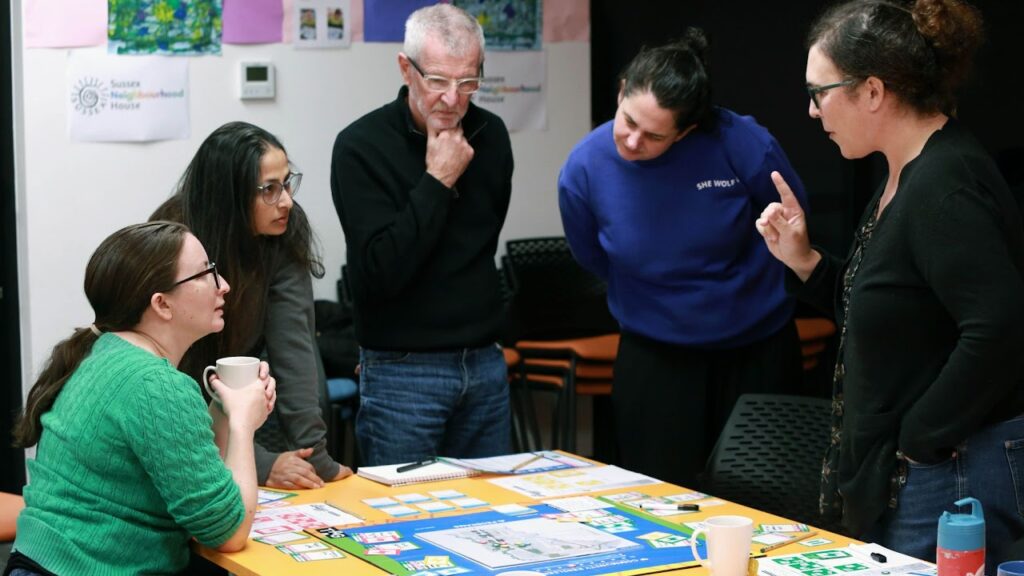
In the wake of the January 2025 fires that devastated the community of Harcourt, the Castlemaine Institute with the support of Mount Alexander Shire Council, is facilitating a series of three workshops with community and government to embed learnings and undertake scenario planning for disaster resilience.
The Adaptation Game (TAG) will be employed to structure participation and provide a safe and novel avenue to guide planning. TAG is an award-winning tabletop scenario-planning experience designed to prepare participants for the impacts of natural disasters, with specific scenarios designed for Mount Alexander Shire.
Planning for natural disasters in Mount Alexander Shire
Many households, businesses and organisations within Mount Alexander Shire have long been involved in preparing for natural disasters, whether through the design of policies and programs for the whole community, or through efforts to protect their own property and enterprises.
The recent fires in Harcourt were a stark reminder of the gaps in our disaster readiness and offer an opportunity to focus efforts where they will have most impact. For example, Castlemaine Institute’s Whole of Home Resilience research showed that homes in this shire rate only 1 out of 5 for bushfire resilience, but there are many small and low-cost actions that households can take to decrease risk.
Council’s work to design the The Adaptation Game is one avenue to get these conversations going, informed by science and designed to encourage collaborative effort. Playing the game also comes with lots of information about avenues for assistance and supportive policies.
Using the Adaptation Game
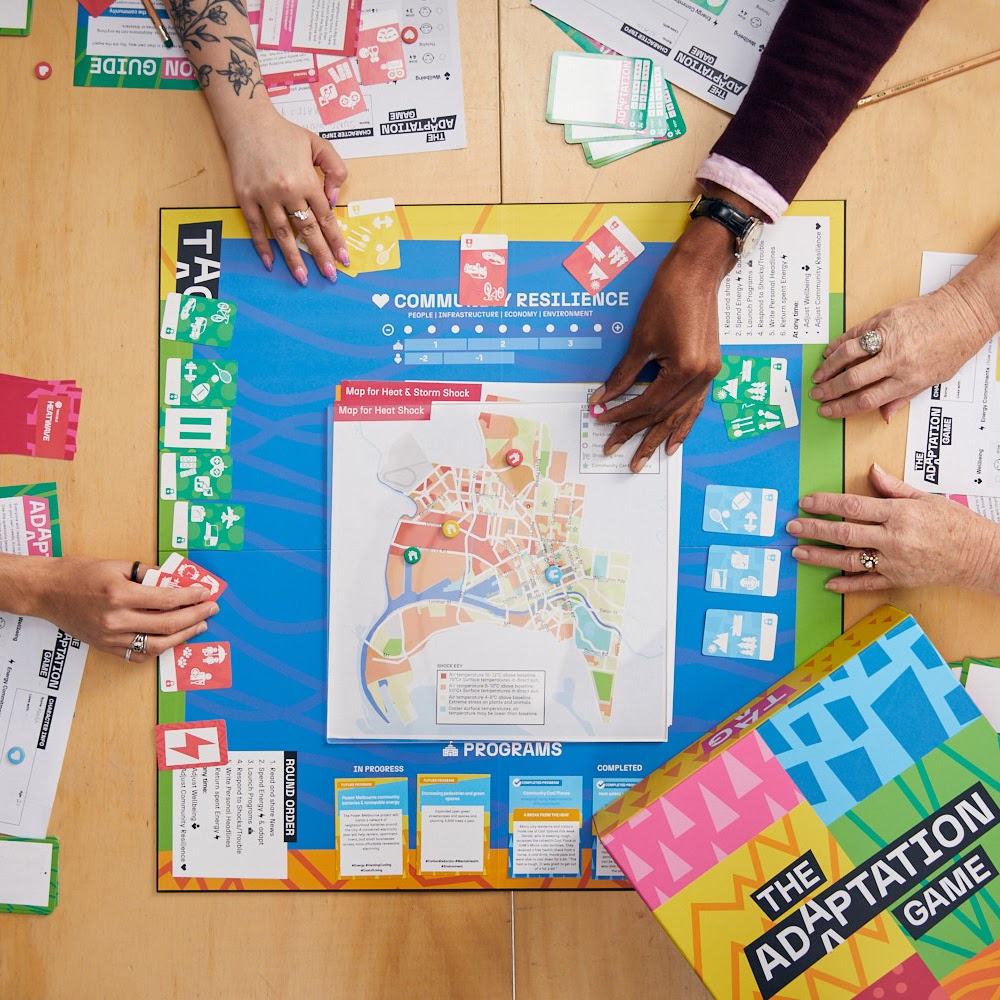
The Adaptation Game (TAG) is an inclusive story-telling experience that scales climate change and disaster preparedness down from overwhelming global fears to local, human risks and realities.
TAG provides a fictional experience of ‘living through’ three natural disasters in their local area. TAG enables players to create their own place-based storylines that clearly and meaningfully humanises the concept of disaster planning and climate change into players’ lives in a meaningful, practical, actionable way. After playing, players have taken actions such as joining community groups, starting neighbourhood WhatsApp groups, and generally reporting a better understanding of personal and communal resilience.
Mount Alexander Shire Council worked with the creators of TAG to develop a game suited to this community’s local context, specifically modelling scenarios that reflect flood, storm, bushfire and heatwave risk and scenario predictions for this region. MASC joins many other Councils in this project, as a member of the TAG community of practice, aiming to assist Victorians to build resilience and adapt to climate change impacts.
The game is available for loan at the Castlemaine Library.
Get Involved
Workshop #1: West End Residents
This facilitated workshop is open to members of the West End Resilience Neighbourhood Group in Castlemaine. Playing the game with neighbours offers a rich opportunity to develop actionable collective responses as part of scenario planning.
Tuesday, 24 February 9am-1pm
Total number of places available: 16
Location: Botanic Gardens Tea Rooms
Workshop #2: Community Connectors
This facilitated workshop is aimed at those in the community who occupy leadership roles and are well positioned to both reflect on the experience of whole cohorts in the community as well as spread the word about the TAG Game or create opportunities for others to play it. in the future.
Wednesday, 4 March 9am-1pm
Total number of places available: 16
Location: Ray Bradfield Room
Workshop #3: Local Government
This facilitated workshop is available for employees of Mount Alexander Shire Council, particularly those in positions of leadership or whose role involves working directly with the community. By positioning this workshop last in the series, community findings can feed into decision-making in an iterative way.